


Critical illness insurance: Why it matters?
Key Takeways:
- Critical illness insurance pays a lump sum if you are diagnosed with a serious health condition covered under the policy.
- The payout can help manage treatment costs, recovery expenses, or income loss during difficult times.
- When choosing critical illness protection, it’s important to pay attention to which illnesses are covered and the waiting period before you can claim your benefits.
Dealing with a major medical crisis like cancer, heart attacks, strokes, or organ failures can be a heavy burden for any family. Beyond the emotional toll, rising hospital bills, specialised surgeries, and long-term recovery periods could impact your financial stability.
Critical illness insurance helps lift that weight, providing a financial safety net exactly when you need it most. Let us understand what critical illness is and how the right insurance plan can provide the essential protection and peace of mind you deserve.
What is critical illness insurance and how does it help?
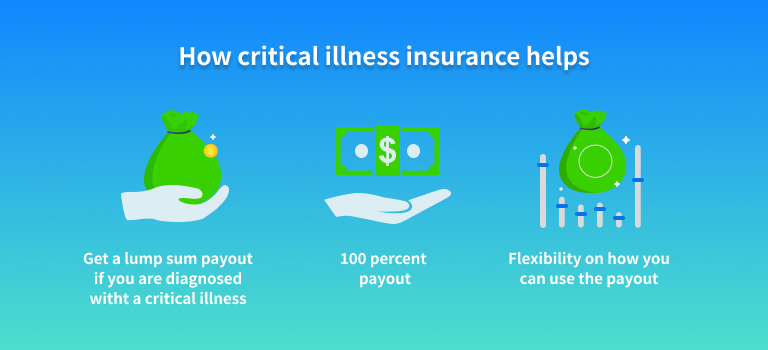
A critical illness is a serious, life-threatening medical condition that can deeply affect your physical health and disrupt your daily life. Critical illness insurance is a type of health cover that pays out a lump sum amount if you are diagnosed with any of the major illnesses listed in the policy.
The insurance company will pay the sum assured as a lump sum for a covered condition, such as a major organ transplant, a stroke, or a specified stage of cancer. Here is how critical illness protection provides you with financial support after you are diagnosed with a serious health condition.
Lump sum benefit on diagnosis
If you’re diagnosed with a listed critical illness, you’ll receive the entire sum assured as a single, one-time payment. This can help pay for medical bills, treatments, or even everyday living expenses.
How to choose a critical illness insurance policy?
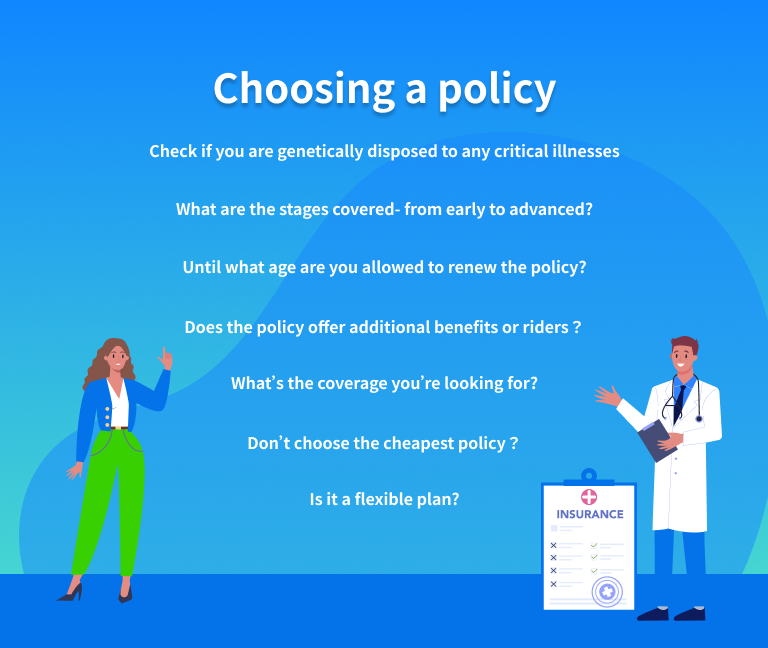
If you are thinking about buying critical illness protection, here are some factors to keep in mind:
- Coverage: The most important element of all types of insurance policies is the extent of protection they provide. Check how many and which illnesses are covered under the policy.
- Cost vs benefit: The most affordable policy is not necessarily the best. Try aiming for a good balance of a reasonable premium and dependable coverage.
- Waiting and survival periods: Policies may include a waiting period before you are eligible to make a claim. Furthermore, there may be a survival period following a diagnosis before the benefit is paid out.
What is critical illness cover compared to health insurance?
A standard health insurance plan in India provides reimbursement for hospital expenses and treatment costs, but critical illness insurance pays the Sum Assured, which can be used freely. This is important because treatment expenses are only a part of the financial burden. Loss of income or added household costs can also hit hard during recovery.
Your life and financial situation can be seriously impacted by a critical illness. Without adequate cover, you might have to exhaust your savings, liquidate your investments, or take out loans with high interest rates. The right policy gives you a financial cushion, making an already tough time just a little easier to manage
Planning ahead can make a real difference during medical emergencies. Explore Standard Chartered’s health insurance plans to see how you can strengthen your protection.
FAQs about critical illness insurance
- What does “Sum Assured” refer to in critical illness insurance?
The sum assured is the fixed lump sum benefit payable if the policyholder is diagnosed with a critical illness (e.g., cancer, heart attack, or stroke), which is covered by the policy. - What is the waiting period for critical illness insurance?
The waiting period varies by insurer and policy but typically ranges from 30 to 90 days. In some cases, there may be no waiting period, or it may be longer. It also differs for pre-existing conditions and specific diseases, depending on the policy terms. - How does the survival period affect the critical illness insurance payout?
The survival period determines the eligibility for the payout. The benefit may not be paid if the insured person (or policyholder) does not survive the specified period after diagnosis. Though this is subject to the policy’s terms and conditions. - Is it necessary to have critical illness insurance?
While not compulsory, critical illness insurance can be beneficial, especially upon the diagnosis of a covered critical illness. - Do I need critical illness insurance if I already have health insurance?
It is still advisable to consider having critical illness insurance coverage in addition to health insurance. While health insurance covers medical costs, critical illness insurance provides a lump-sum
cash payout that can be used for other financial needs during recovery.


This article is for information and educational purposes only. It is meant for use only as a reference tool. It has not been prepared for any particular person or class of persons. The products and services mentioned may not be suitable for everyone and should not be used as a basis for making investment decisions. This article does not constitute investment advice nor is it an offer, solicitation or invitation to transact in any investment or insurance product. The value of investments and the income from them can go down as well as up, and you may not recover the amount of your original investment. Prior to transacting, you should obtain independent financial advice. In the event that you choose not to seek independent professional advice, you should consider whether the product is suitable for you. You should refer to the relevant offer documents for detailed information.
Standard Chartered Bank, India is an AMFI-registered mutual fund distributor and a referrer of other third party investment products and does not provide any investment advisory services as defined under the SEBI (Investment Advisers) Regulations, 2013 or otherwise. Investments are subject to market risks. Please read scheme related documents carefully before investing. Past performance of the sponsor / AMC / Mutual Fund does not indicate the future performance of the scheme(s). All products are subject to suitability and availability.